
Christmas dinner
Danish Roast Pork with Crackling
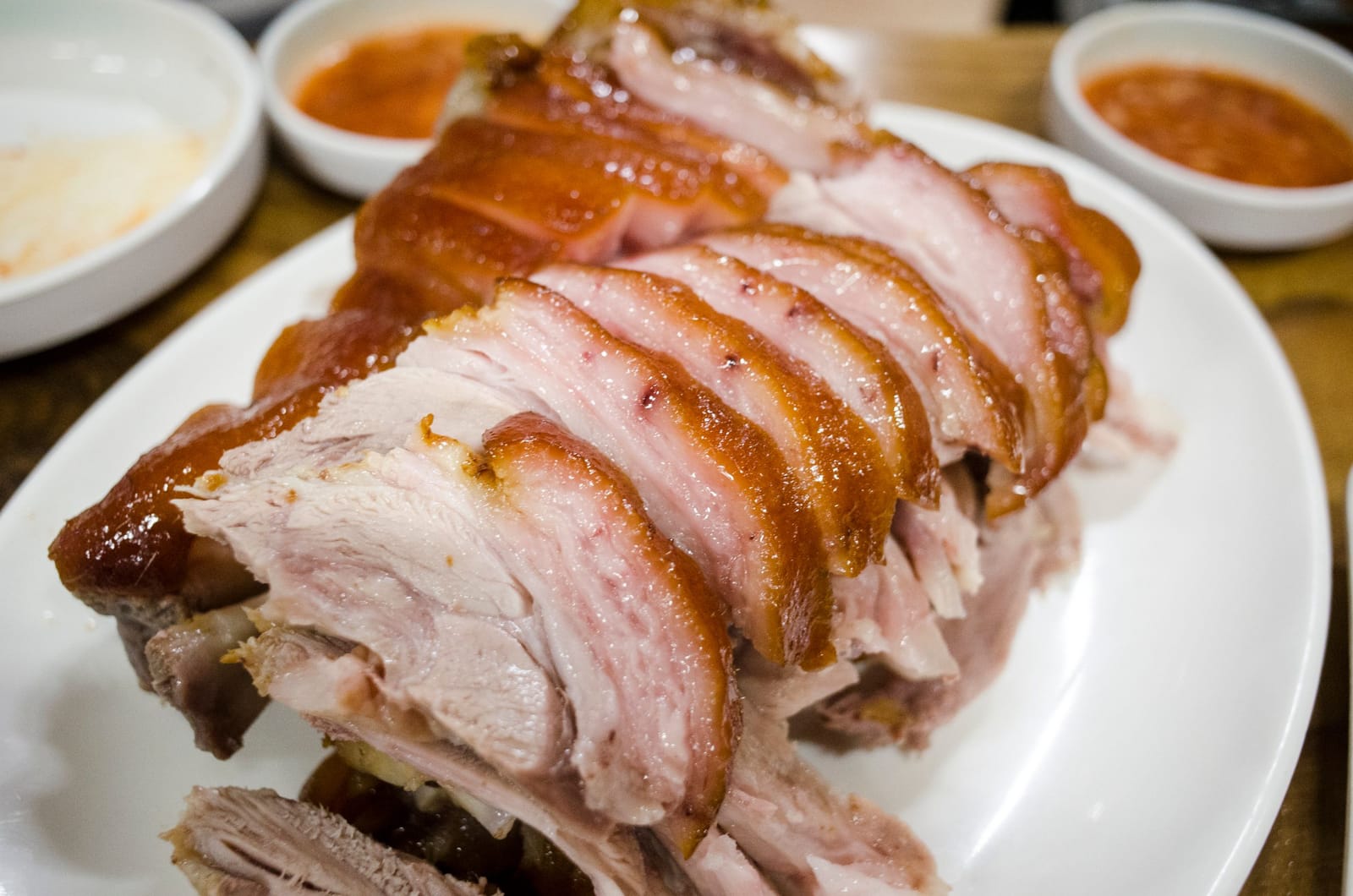
Flæskesteg is the pork roast that shares the Danish Christmas Eve table with roast duck, crowned with a strip of crisp, salty crackling on every slice. Serve it the way Danish families do, with brown gravy, red cabbage and small browned potatoes.
- Makes
- 6 to 8 servings
- Prep
- 15 min
- Cook
- 2 hr 5 min
- Ready in
- 2 hr 50 min
Ingredients
For the roast
For the gravy
For serving
Steps
- About 30 minutes before cooking, take the pork out of the refrigerator. If the butcher has not scored the skin, use a very sharp utility knife to cut parallel lines about 1/2 inch apart, through the skin and fat but not into the meat. Pat the skin very dry with paper towels.
- Heat the oven to 425°F with a rack in the center. Set the roast skin side down in a baking dish just big enough to hold it. Pour in boiling water about 1 inch deep, so the skin is covered. Bake for 20 minutes. The skin will soften and the cuts will open.
- Carefully lift out the roast and pour off the water. Set the roast on a rack in a roasting pan, skin side up, and pat the skin dry again. Rub the salt well down into the cuts and tuck the bay leaves into them here and there. Check that the top is level. If it tilts, prop up the low side with a ball of foil, so the skin crisps evenly.
- Pour the 2 cups of hot water into the pan, keeping it below the rack. Roast until a thermometer in the center reads 145°F to 150°F, 1 to 1 1/2 hours. Start checking after 45 minutes. Add more water if the pan runs dry.
- If the skin has not puffed up and crackled all over, turn on the broiler and broil for 3 to 5 minutes, watching the whole time, until it is blistered and crisp and sounds hollow when tapped. Move the roast to a cutting board and let it rest, uncovered, for 15 to 20 minutes. Covering it would soften the crackling.
- Pour the pan juices through a strainer into a fat separator or measuring cup and let the fat rise. Spoon off the fat, saving 4 tablespoons. If you are short, make it up with butter. Add chicken broth to the juices to make 2 1/2 cups.
- In a saucepan over medium heat, warm the fat and whisk in the flour. Cook, whisking, for 2 minutes, until it smells nutty. Slowly whisk in the juices and simmer, whisking now and then, until the gravy coats a spoon, 5 to 10 minutes. Stir in the cream and red currant jelly. Taste before adding salt and pepper, because the juices can be salty.
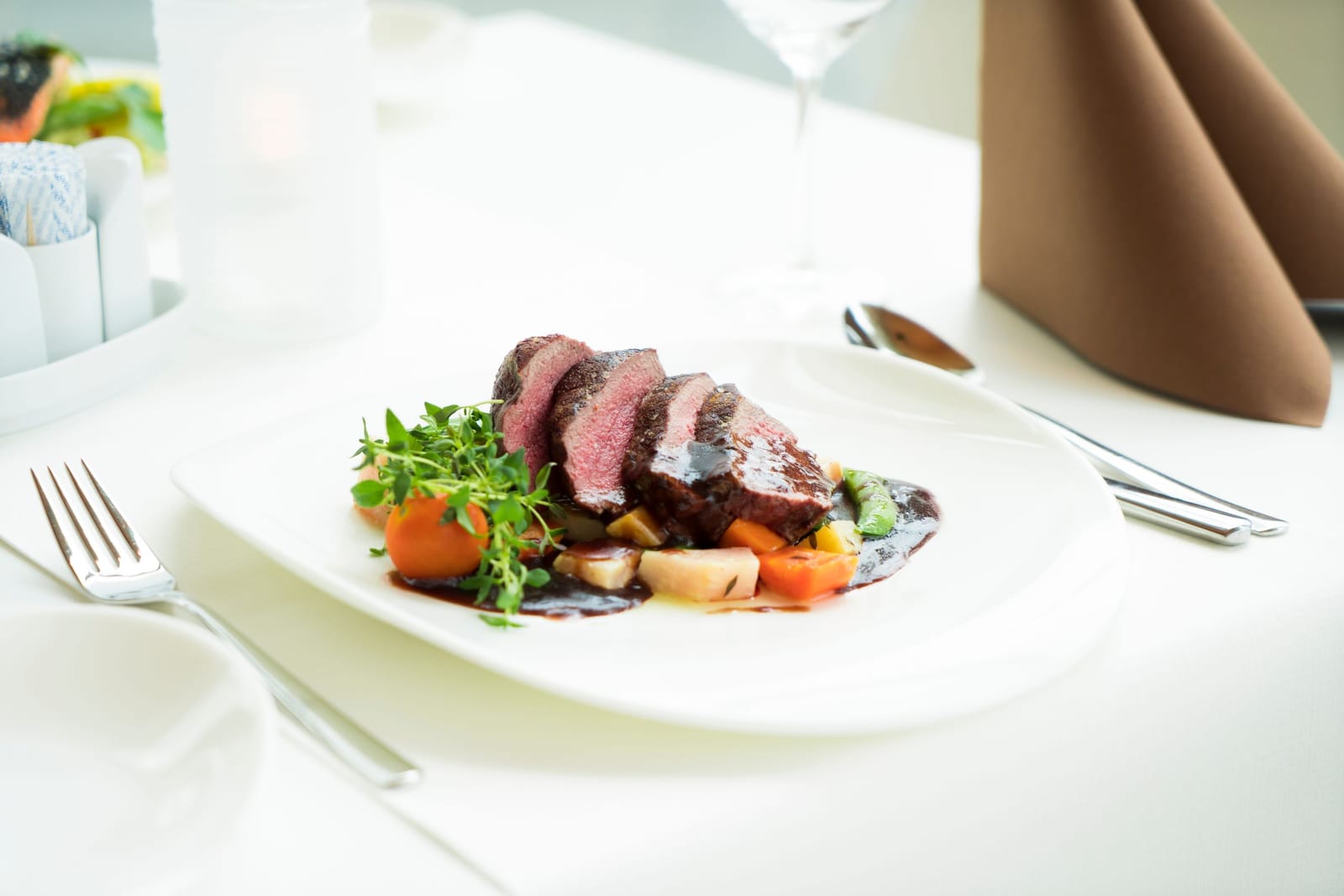
- Pick off the bay leaves. Cut the roast along the scored lines with a serrated knife, so each slice keeps its strip of crackling. Serve right away with the gravy, potatoes and red cabbage.
Good to know
- Buying the roast: most US supermarkets remove the skin, so call a butcher a week or so ahead and ask for a boneless pork loin roast with the skin on. Skin-on pork belly, often easier to find at Asian markets, works too. Danes call it ribbenssteg. Roast it at 400°F until the center reads 165°F to 170°F, so the fat melts, about 1 1/2 hours.
- Make ahead: score the skin the day before and leave the roast uncovered on a rack in the refrigerator overnight. Drier skin crackles better.
- Browned potatoes: boil 2 pounds of small potatoes, peel them, chill them and pat them dry. Melt 1/2 cup sugar in a wide skillet over medium heat until amber. Stir in 3 tablespoons butter, then roll the potatoes in the caramel until glazed and golden, about 10 minutes.
- Leftovers keep 3 to 4 days in the refrigerator. Store the crackling separately and uncovered so it stays crisp. Thin slices of cold pork are lovely on buttered rye with pickled red cabbage.
 Watch with it A Danish Christmas Hallmark Channel, Friday, November 13 at 6:00 PM ET
 From our shop Polar bear crewneck The roast takes all afternoon. Our polar bear crewneck keeps the cook comfortable and festive.
Good to have
- roasting pan with rackPaid link
- instant-read thermometerPaid link
- fat separatorPaid link
- utility knifePaid link
- serrated knifePaid link
As an Amazon Associate we earn from qualifying purchases.