

A clear glass ornament hanging on a lit Christmas tree, reflecting the room and the tree lights

Christmas traditions Ornaments

Trimming the Tree

Glass from a German village, a star for the Wise Men and an ornament for every year of the family's story

A glass ornament on the tree

Most American families trim the tree between Thanksgiving weekend and the first week of December. Here is how the tree got its ornaments, from a glassmaking village in Germany to the five-and-ten and the White House, and how to make a few of your own: a craft card for salt dough ornaments, the pantry for trimming the tree and two December movies about ornaments.

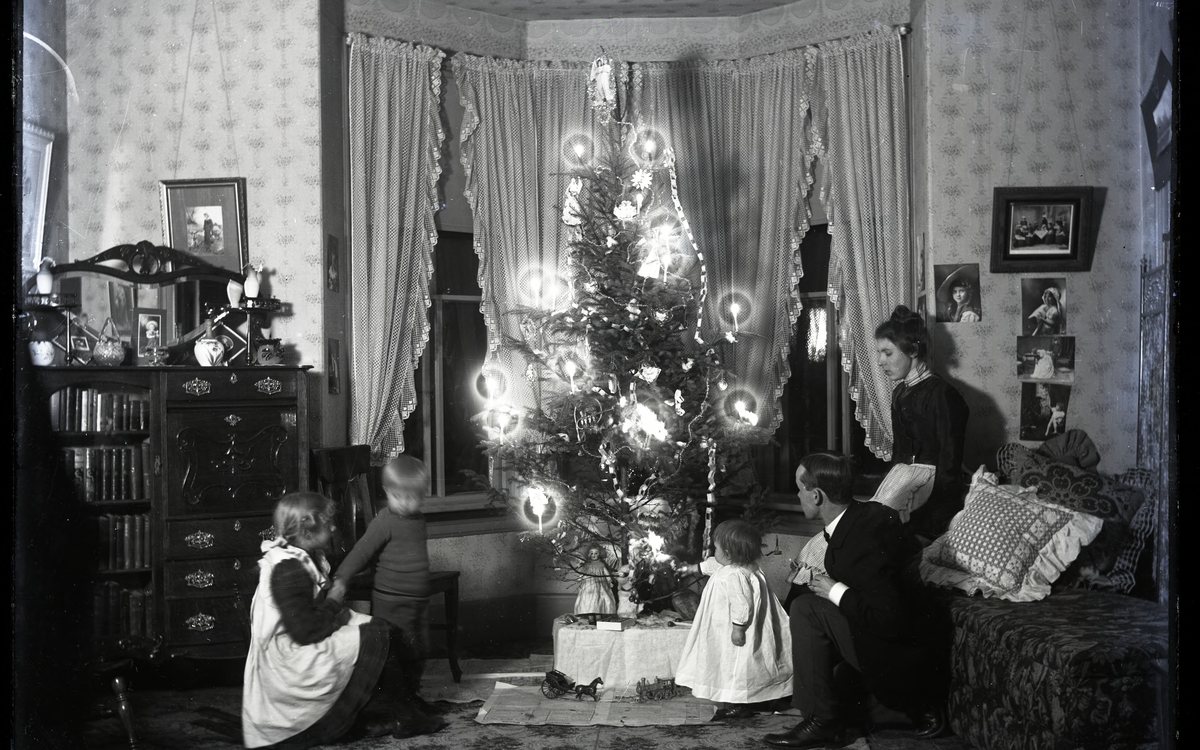
An old black-and-white photograph of a family gathered around a candlelit Christmas tree in a bay window
The Holcombe family at their tree, Stillwater, Minnesota, December 1900

From the old country

A tree from Germany

The decorated Christmas tree came from Germany, where families hung apples, gilded nuts and candles on evergreens. German immigrants brought it to America in the 1800s, and by 1867 Harper's Weekly could call the "pleasant Germanic custom" thoroughly at home here.

Before shops sold ornaments, Americans trimmed their trees with what they had. In 1842 a German professor in Williamsburg, Virginia, trimmed a little tree for the children of the house with strings of popcorn, and popcorn and dried cranberry garlands became a homespun American custom.

Gloved hands lifting freshly silvered glass ornaments out of a tank of hot water
Silvering glass ornaments in LauschaPhoto: Krebs Glas Lauscha, CC BY 3.0

Lauscha, Germany

Glass from a village in the forest

Glass ornaments began in Lauscha, a glassmaking village in Germany's Thuringian Forest. As the legend goes, in 1847 a glassblower who could not afford the apples and walnuts people hung on their trees blew balls of glass instead. The first written order for glass Christmas balls dates from 1848.

For about a hundred years, the glassblowers' wives carried the ornaments in wicker baskets over the mountains to the merchants of nearby Sonneberg, and from there they went out to the world. In Lauscha they are still blown and painted by hand.

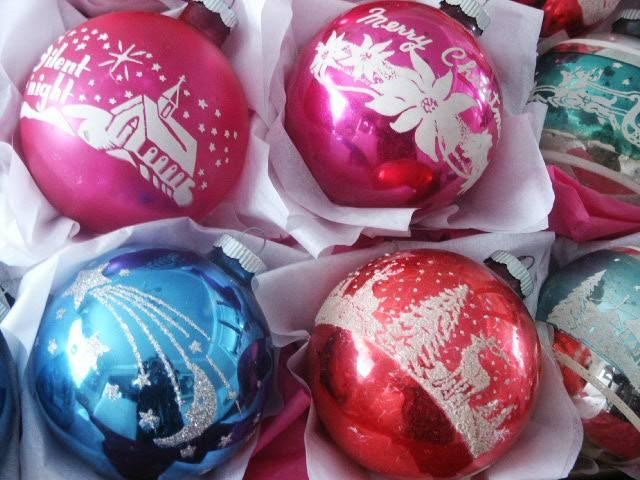
Four mid-century glass ornaments in their box, stenciled with a church and Silent Night, poinsettias and Merry Christmas, a shooting star and deer
Vintage stenciled glass ornaments

The five-and-ten

From Woolworth to Shiny Brite

By the late 1800s, Woolworth's five-and-ten stores were selling German glass ornaments across America, and by the 1920s nearly every glass ornament on an American tree came from Europe.

When war threatened that supply in 1939, a German-born importer named Max Eckardt and a man from Woolworth persuaded Corning Glass Works to turn a light-bulb machine into an ornament machine. In 1940 one machine in Wellsboro, Pennsylvania, made 40 million ornament bulbs, and Eckardt's Shiny Brite ornaments, made in America, filled American trees through the 1940s and 1950s. During the war, even their metal caps gave way to cardboard.

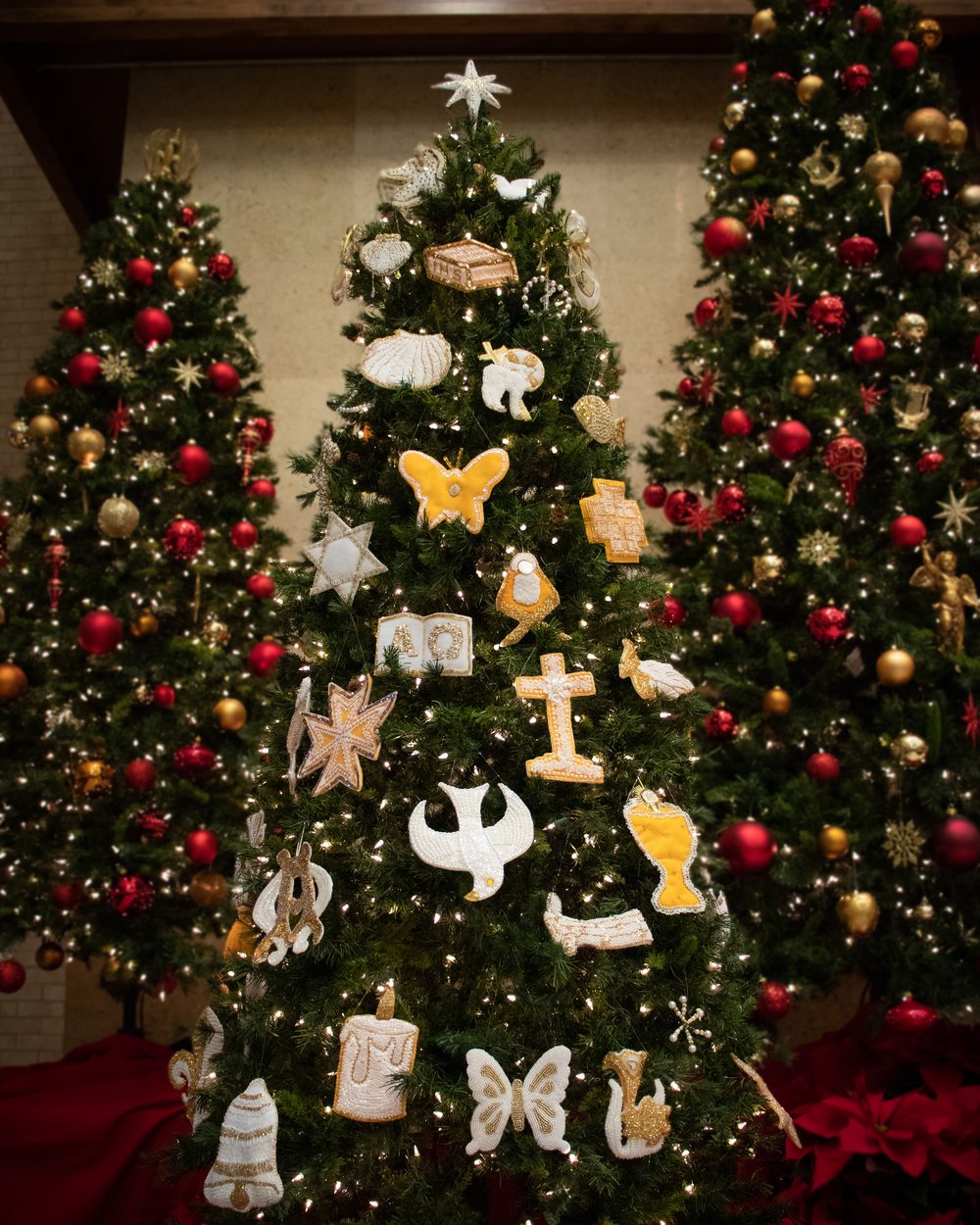
A church Christmas tree hung with white and gold ornaments of a dove, a lamb, crosses, chalices and an open book
A Chrismon tree in a church in Austin, TexasPhoto: Marie Nuñez, CC BY-SA 4.0, cropped

Danville, Virginia, 1957

A tree that tells the story of Jesus

In 1957, Frances Kipps Spencer of Ascension Lutheran Church in Danville, Virginia, began making ornaments for her church's tree in white and gold, shaped like the monograms and symbols of Christ. She called them Chrismons, for "Christ monograms." One of the first was the Chi Rho, the monogram for Christos, the Greek word for Christ.

White and gold stand for the purity and majesty of the Son of God. Ascension still hangs her originals every Christmas, 2026 brings its 70th Chrismon tree, and Chrismon trees now stand in churches far beyond Virginia.

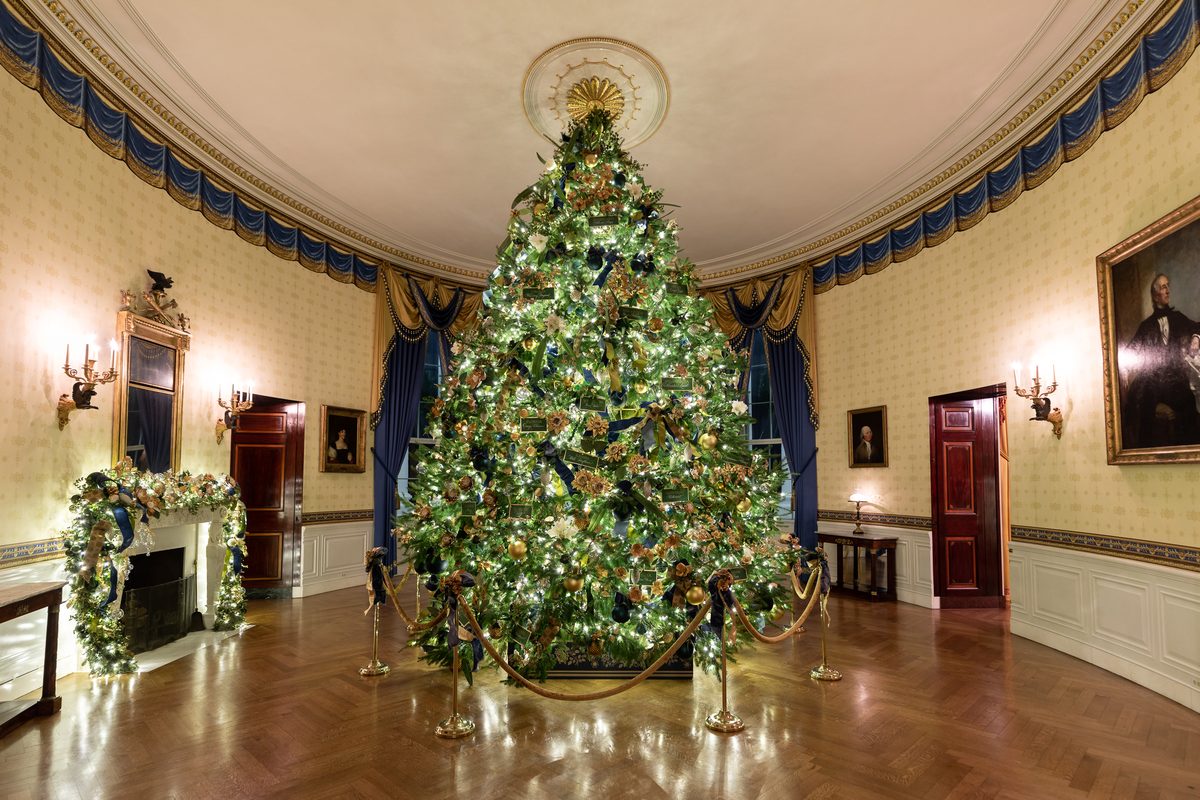
The tall lit Christmas tree in the oval Blue Room of the White House, with a garlanded fireplace
The Blue Room of the White House at Christmas, 2019

The White House

An official ornament every year

The first known White House Christmas tree went up in 1889, for President Benjamin Harrison's family, lit with candles in an upstairs parlor. Since 1981, the White House Historical Association, founded by Jacqueline Kennedy, has issued an official ornament every year, each one by a new designer.

Most honor a president, in order, and the 2026 ornament marks America's 250th birthday. It is sold through the Association's own shop, and the sales support its education and preservation work.

A child's hands tying a little green glass ornament onto a branch hung with red and gold balls
Hanging an ornamentPhoto: Nenad Stojkovic, CC BY 2.0, cropped

An ornament every year

The family story on the tree

Hallmark's first 18 Keepsake Ornaments came out in 1973, six glass balls and twelve of yarn, each dated with the year. A new collection now premieres every July, and many families mark the years on the tree: a Baby's First Christmas ornament, then one new ornament each year, until the tree tells the family's story.

An ornament exchange keeps the collection growing. Each guest brings one wrapped ornament. Draw numbers, and on your turn open a new one or steal one already opened. Most groups cap steals at three and set a budget of $15 to $25.

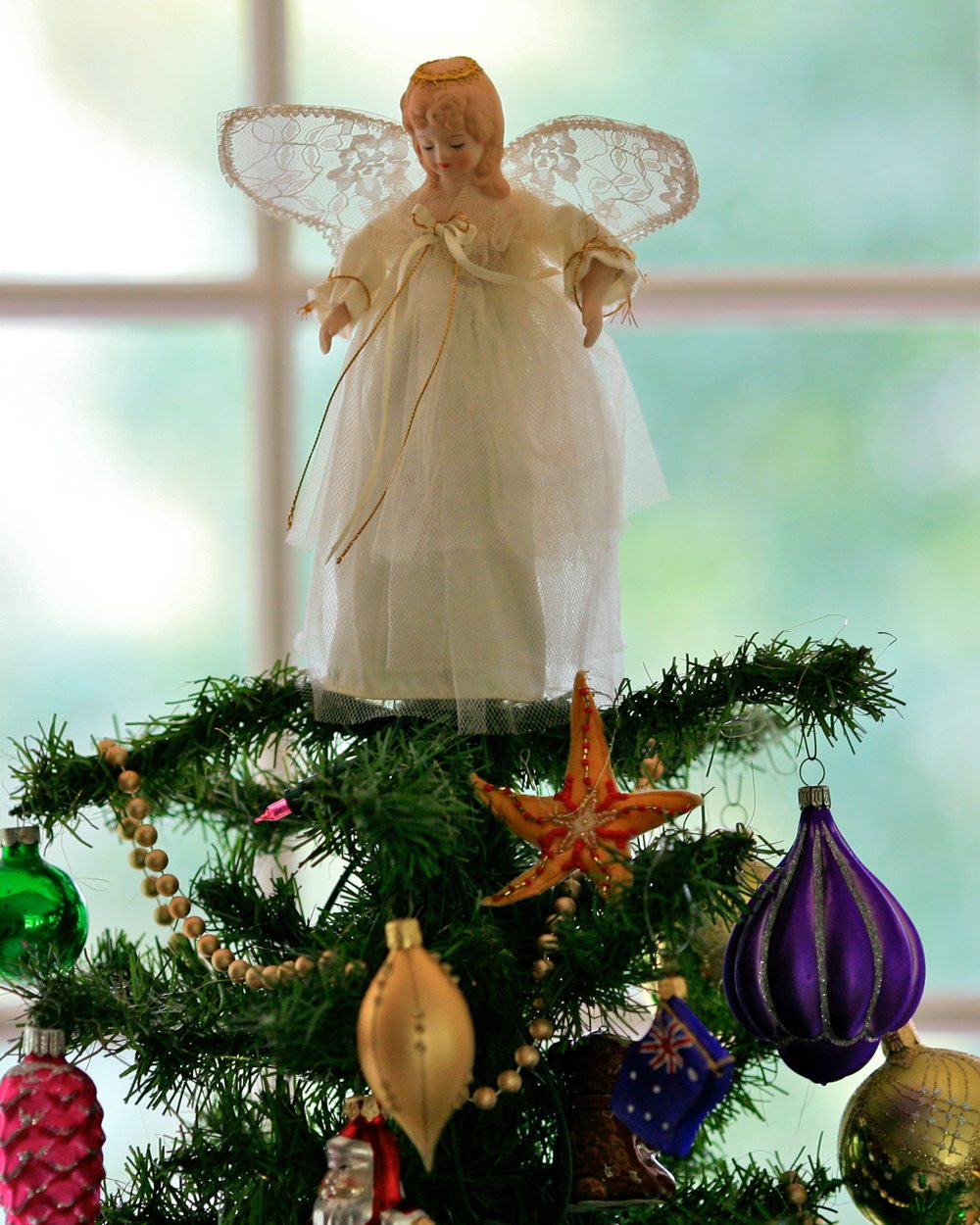
An angel with lace wings and a white dress on top of a Christmas tree, before a sunny window
An angel on topPhoto: Alex Proimos, CC BY 2.0, cropped

The star and the angel

What goes on top

Nearly half of American families crown the tree with a star, for the star that led the Wise Men to Bethlehem. About one in five choose an angel, for the angels who brought the good news to the shepherds.

And then there is the pickle. The "German" Christmas pickle is really an American custom: in a YouGov poll, 91 percent of Germans had never heard of it. Hide a glass pickle deep in the branches, and whoever spots it first opens the first present.

Old-fashioned, safely

The glow without the flame

For generations, families lit real candles on the tree, only for a few minutes at a time. Electric lights took over by the 1930s, and fire experts today say never to put lit candles on a tree. For the old-fashioned glow, use flameless candles.

Water a real tree every day, keep it three feet from heat, and turn the lights off at bedtime. With pets in the house, the FDA suggests leaving tinsel off the tree altogether.

The craft card

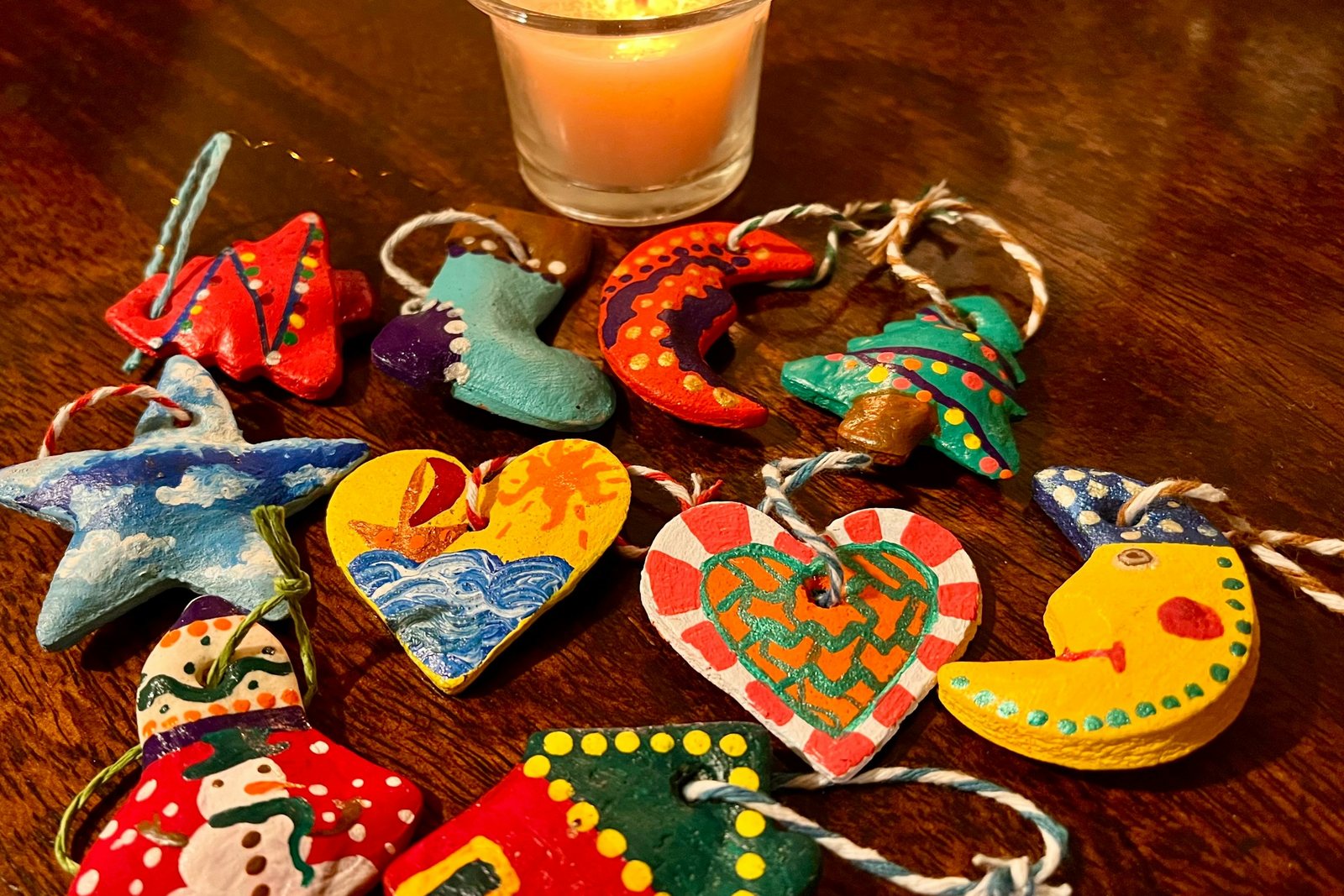
Make the salt dough ornaments

Hand-painted salt dough ornaments of stars, hearts, a snowman and a little house, beside a lit candle

Trimming the Tree JustChristmas

Salt Dough Ornaments

Bake them, paint them and keep them for years

Makes
About 2 dozen
Hands-on
45 min
Ready in
3 hr 30 min

Supplies

For the dough
  • 4 cups all-purpose flour, plus a little more for the counter
  • 1 cup table salt
  • 1 1/2 cups water, plus a few drops more if needed
For shaping
  • Rolling pin
  • Christmas cookie cutters
  • Drinking straw or wooden skewer, for the hanging holes
  • 2 baking sheets lined with parchment paper
For finishing
  • Acrylic or other water-based craft paint
  • Small paintbrushes
  • Clear sealer such as Mod Podge (optional)
  • Thin ribbon or twine, for hanging

Steps

  1. Heat the oven to 250°F and line two baking sheets with parchment paper.
  2. In a large bowl, whisk the flour and salt together. Pour in the water and stir with a sturdy spoon. When the dough gets too stiff to stir, finish mixing with clean hands. If it feels sticky, work in a little more flour. If it is crumbly, add water a few drops at a time.
  3. Turn the dough out onto a lightly floured counter and knead for 5 to 10 minutes, until it is smooth and soft. Divide it into 3 or 4 pieces, and keep the pieces you aren't using covered so they don't dry out.
  4. Roll one piece about 1/4 inch thick. Cut out shapes with cookie cutters and set them on the lined baking sheets. Gather the scraps and roll them again.
  5. Poke a hole near the top of each ornament with a drinking straw or skewer, so you can hang it later.
  6. Bake until the ornaments are hard and completely dry, about 2 hours for 1/4-inch ornaments, turning them over halfway through. Thicker ornaments take longer, so check them and keep baking until they are firm all the way through.
  7. Let the ornaments cool completely on a rack.
  8. Paint them with acrylic or other water-based craft paint, and let the paint dry.
  9. If you like, brush on a clear sealer such as Mod Podge, following the directions on the label, and let it dry.
  10. Thread a piece of ribbon through each hole, tie it in a loop, and hang your ornaments high on the tree.

Not food. Salt dough can poison dogs, so keep pets away while you work and hang the ornaments high. If a pet eats one, call your veterinarian or the ASPCA Animal Poison Control Center at (888) 426-4435.

justchristmas.net/traditions/ornaments
Shop the pantry

The tree-trimming pantry

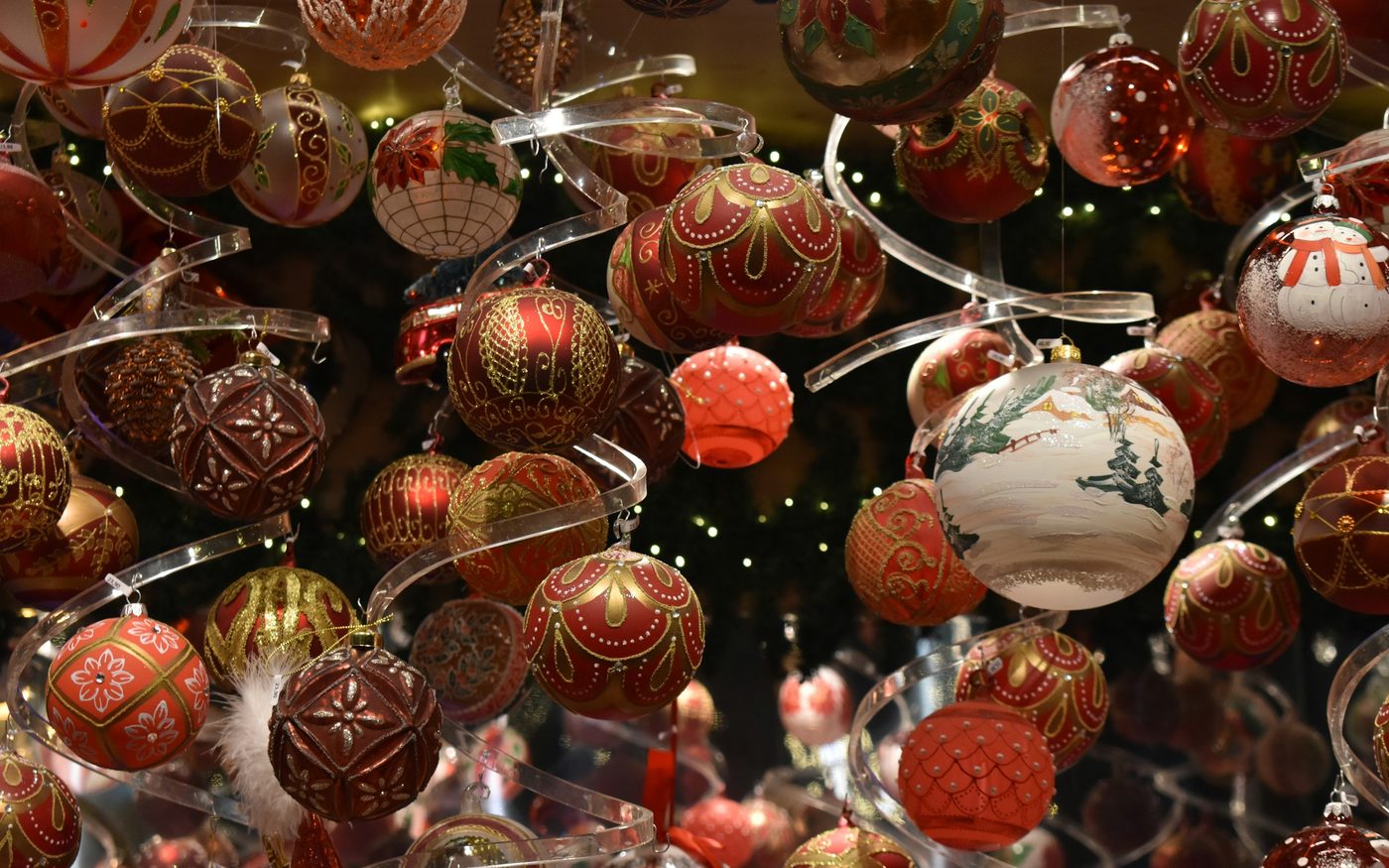
Everything for trimming the tree and a batch of salt dough ornaments, from the glass to the hooks to the boxes they go back in.

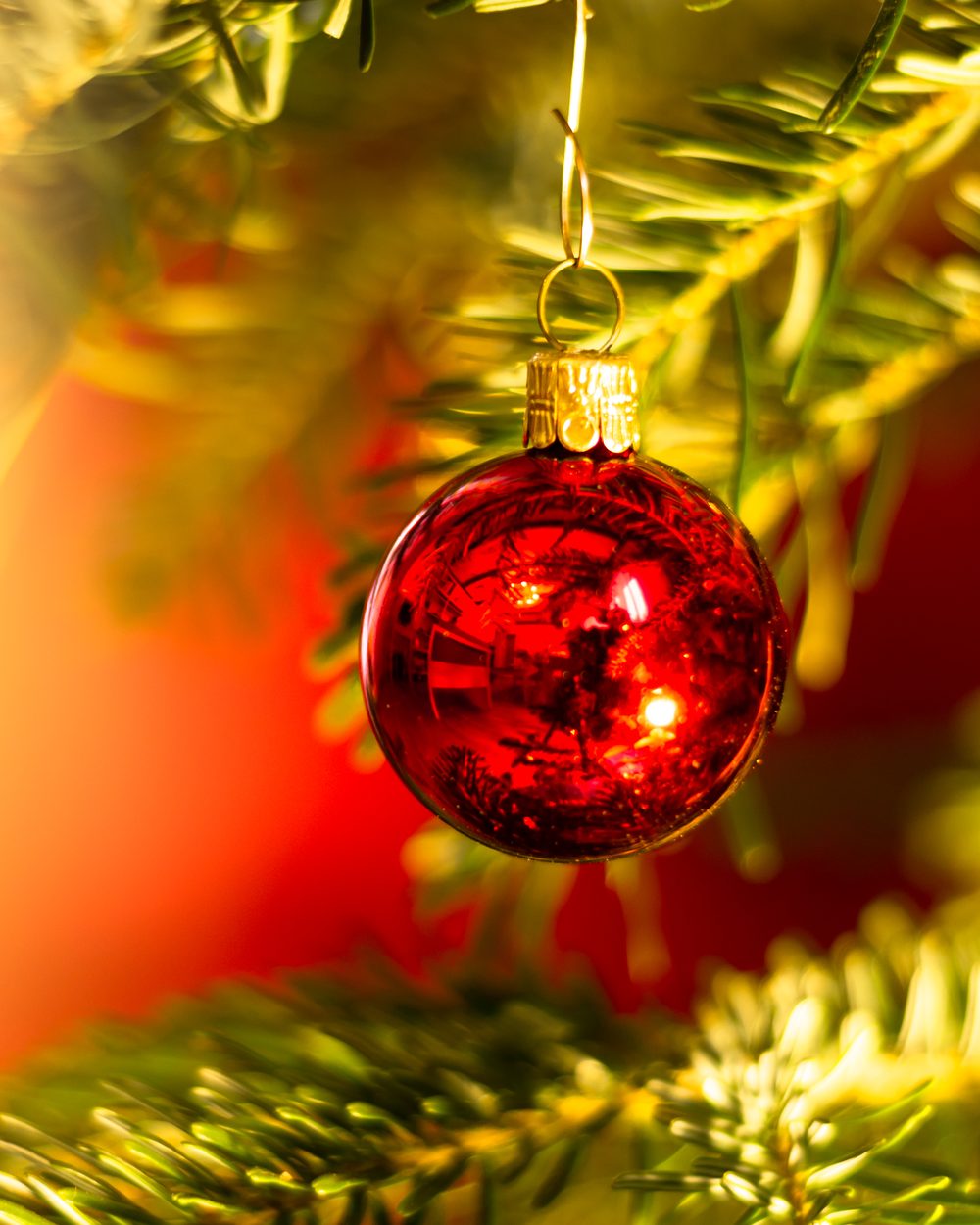
A shiny red glass ornament hanging on a fir branch in warm golden light
A glass ornament on the treePhoto: Theo Crazzolara, CC BY 2.0, cropped
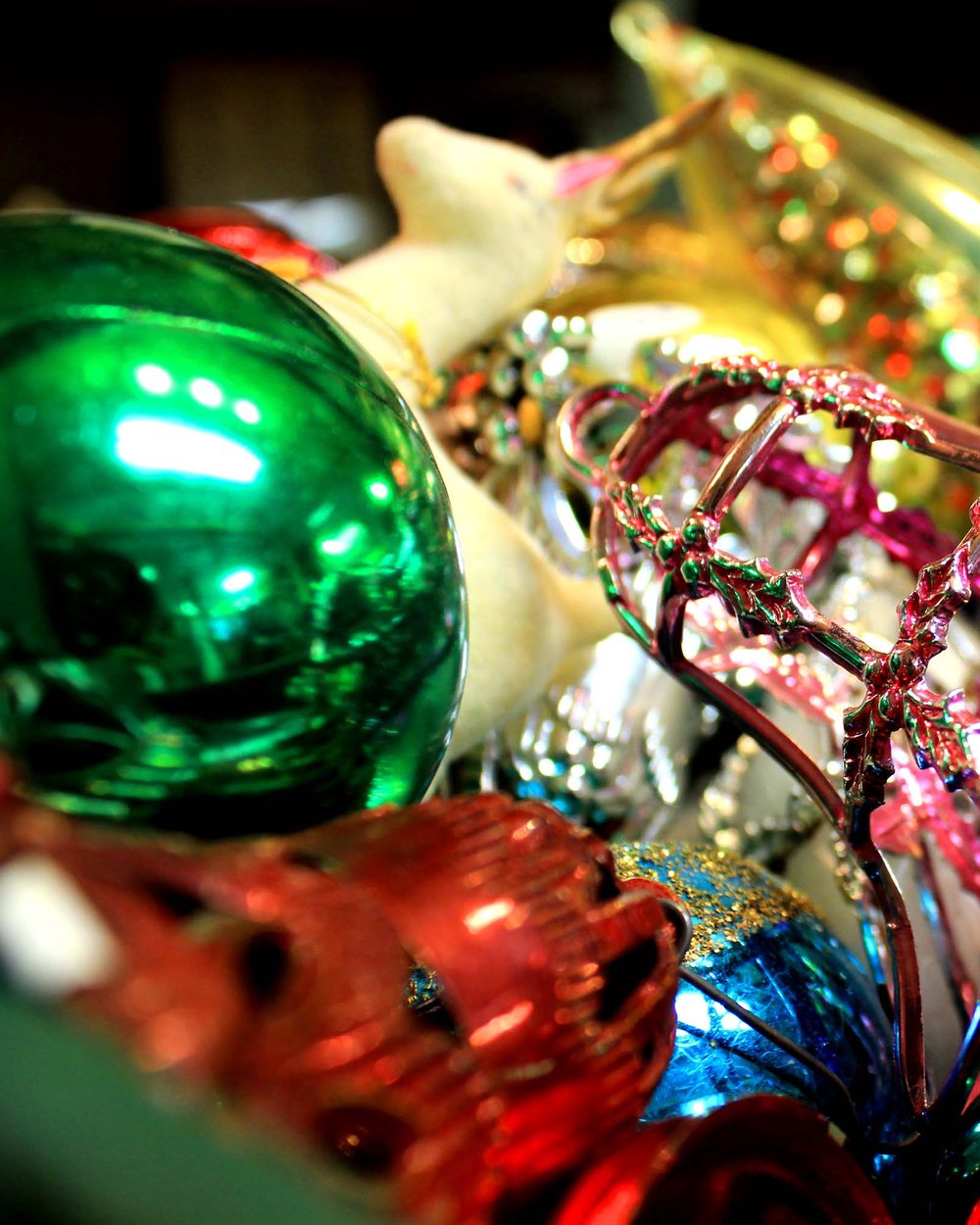
A heap of old Christmas ornaments: a green mirror-glass ball, a pink lattice bell and colored glass drops
Vintage ornamentsPhoto: LadyDragonflyCC, CC BY 2.0, cropped
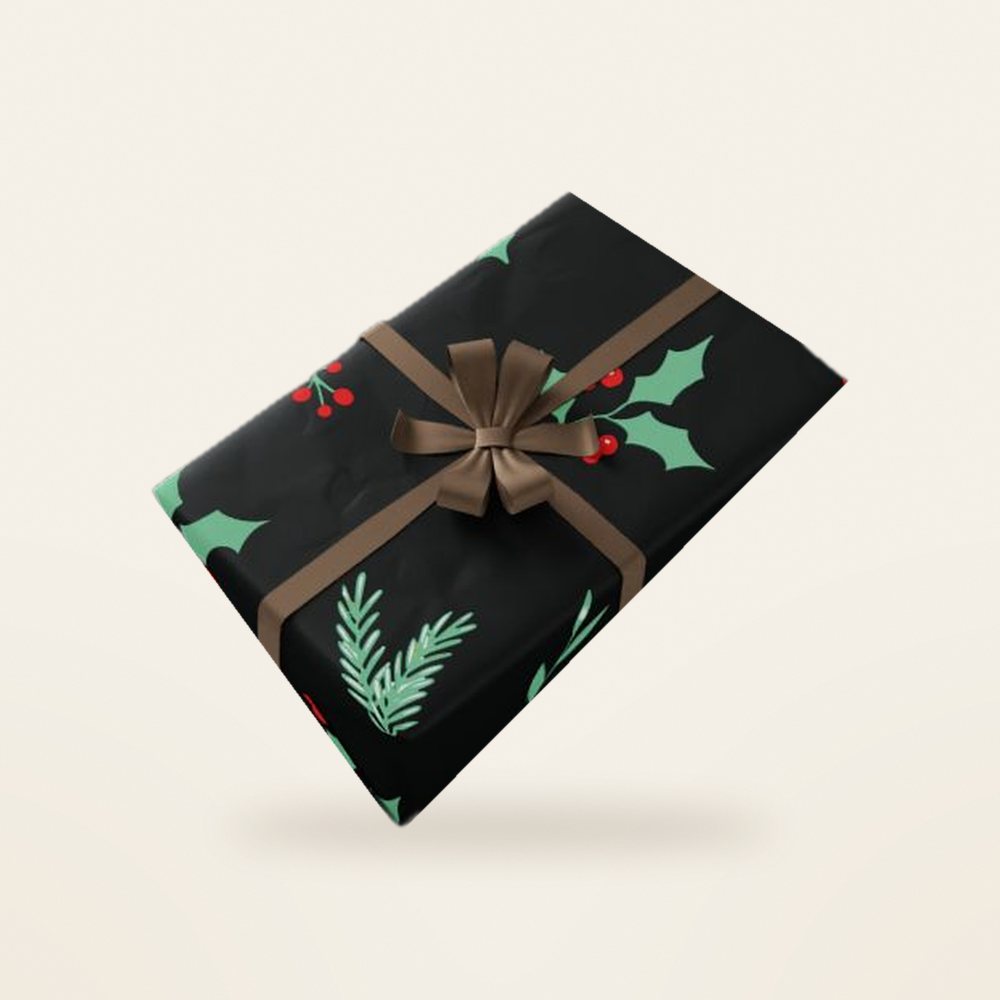
Holly wrapping paper From our shop Holly wrapping paper Bringing an ornament to the exchange? Wrap it in our holly paper.

The JustChristmas email

Bring a little more Christmas home

Join for recipes, traditions and the season's new movies.

By joining, you agree to get the weekly JustChristmas email, with news and offers. Unsubscribe at any time. Privacy