In Italy, Christmas begins on the evening of December 24 with la Vigilia, the vigil, and a long dinner of fish before Mass. Italian families carried that dinner to America, where it became the Feast of the Seven Fishes. Here is how Italy keeps Christmas, and how to bring a little of it home: a recipe card for linguine with clams, the Italian pantry and Hallmark's new movie set in Boston's North End.
The Church once asked Catholics to keep the day before Christmas without meat, and so the great dinner of Christmas Eve became a meal of fish. The rule was relaxed in 1966, but the dinner stayed. Italians call it la cena della Vigilia, and in Rome and the south it grows into a feast: seafood to start, pasta with clams, fried salt cod and eel.
Then many families go to Mass on Christmas night. The presepe, the family nativity scene, has stood since early December, but its manger stays empty until Christmas night, when the Baby Jesus is laid in it.
The Feast of the Seven Fishes
Made in America
The Feast of the Seven Fishes is an Italian-American tradition. Most of the Italians who came to America around 1900 were from the rural south, and they brought the Christmas Eve fish dinner with them. In their new neighborhoods it took on a name and a number. In Italy, the name is all but unknown.
Nobody agrees on why seven. Families point to the seven sacraments or the seven hills of Rome, and plenty of tables serve twelve or thirteen dishes. The name only turns up in American newspapers in the 1980s, but the meal is much older than its name. Here is one way to count to seven.
BaccalàSalt cod, fried or stewed, loved on Italian and Italian-American tables alike.
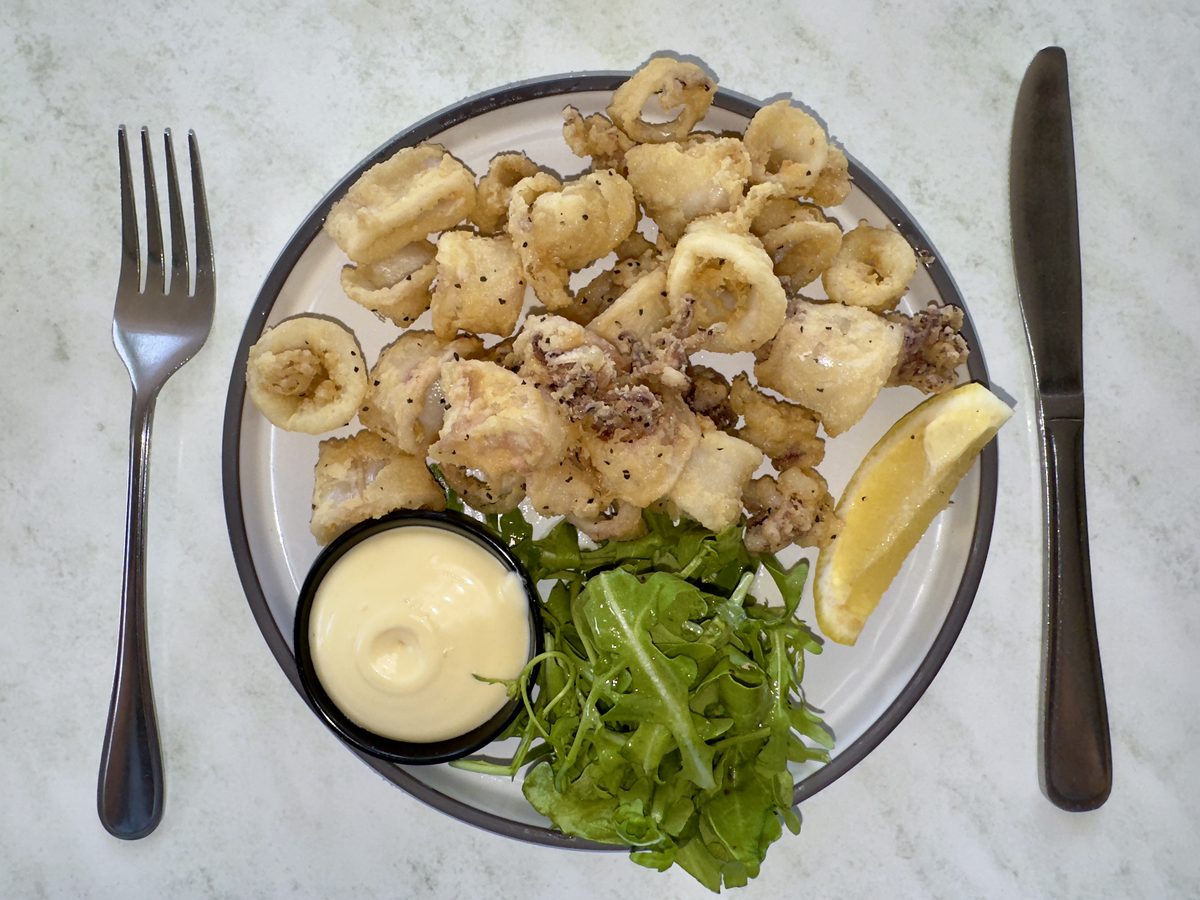
Fried calamariRings of squid, with lemon and marinara.
Fried smeltsSmall whole fish, fried crisp.
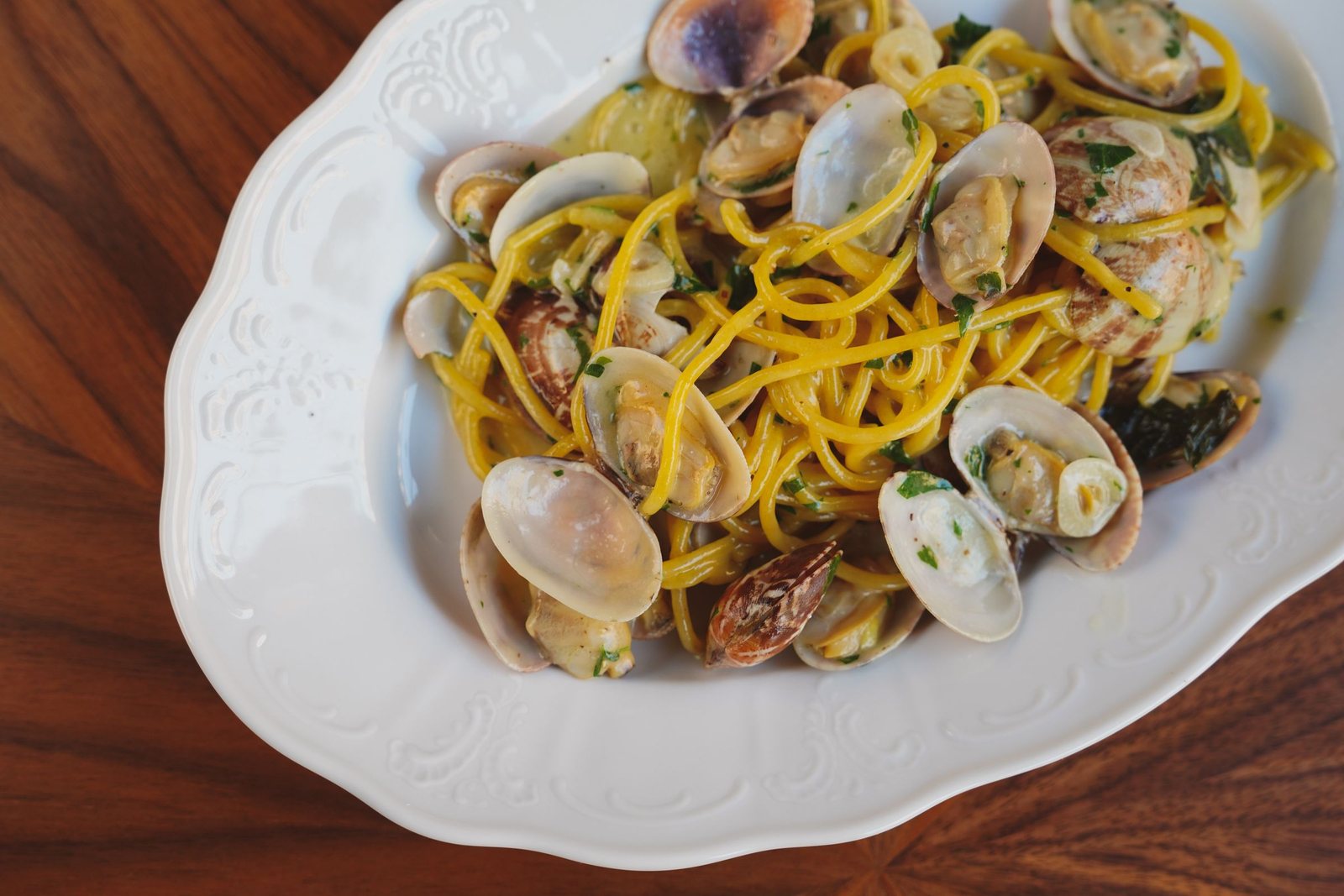
ClamsStuffed with breadcrumbs and baked, or tossed with linguine, as on our recipe card.
ShrimpOften as a chilled shrimp cocktail.
Seafood saladScungilli, shrimp and calamari, served cold.
EelThe Christmas Eve fish of Naples and Rome, rarer on American tables.
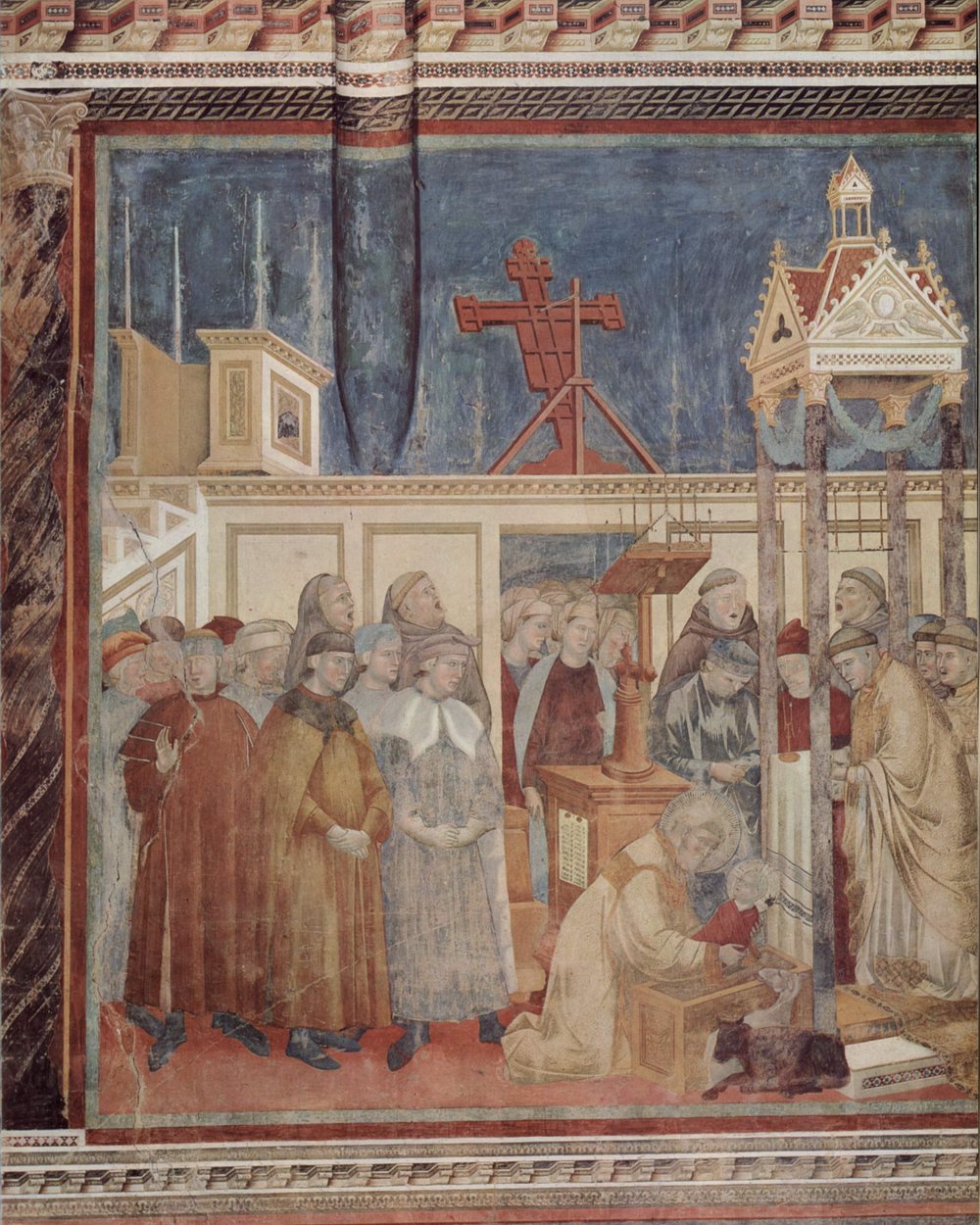
Saint Francis at Greccio, a fresco attributed to Giotto in the Basilica of Saint Francis, Assisi
Greccio, 1223
The first nativity scene
Fifteen days before Christmas in 1223, Saint Francis of Assisi asked a man of Greccio, a small town near Rieti, to help him see how the Christ Child lay in a manger, with an ox and a donkey standing by. On Christmas night the people came to a cave where a manger had been filled with hay, and Mass was said over it. There were no statues. Everyone there was part of the scene, and everyone went home with joy.
Italians have made nativity scenes ever since, and they call them presepi, from the Latin word for a manger. In 2019 Pope Francis went to Greccio to sign a letter on the meaning of the nativity scene, encouraging families to keep making them at home.
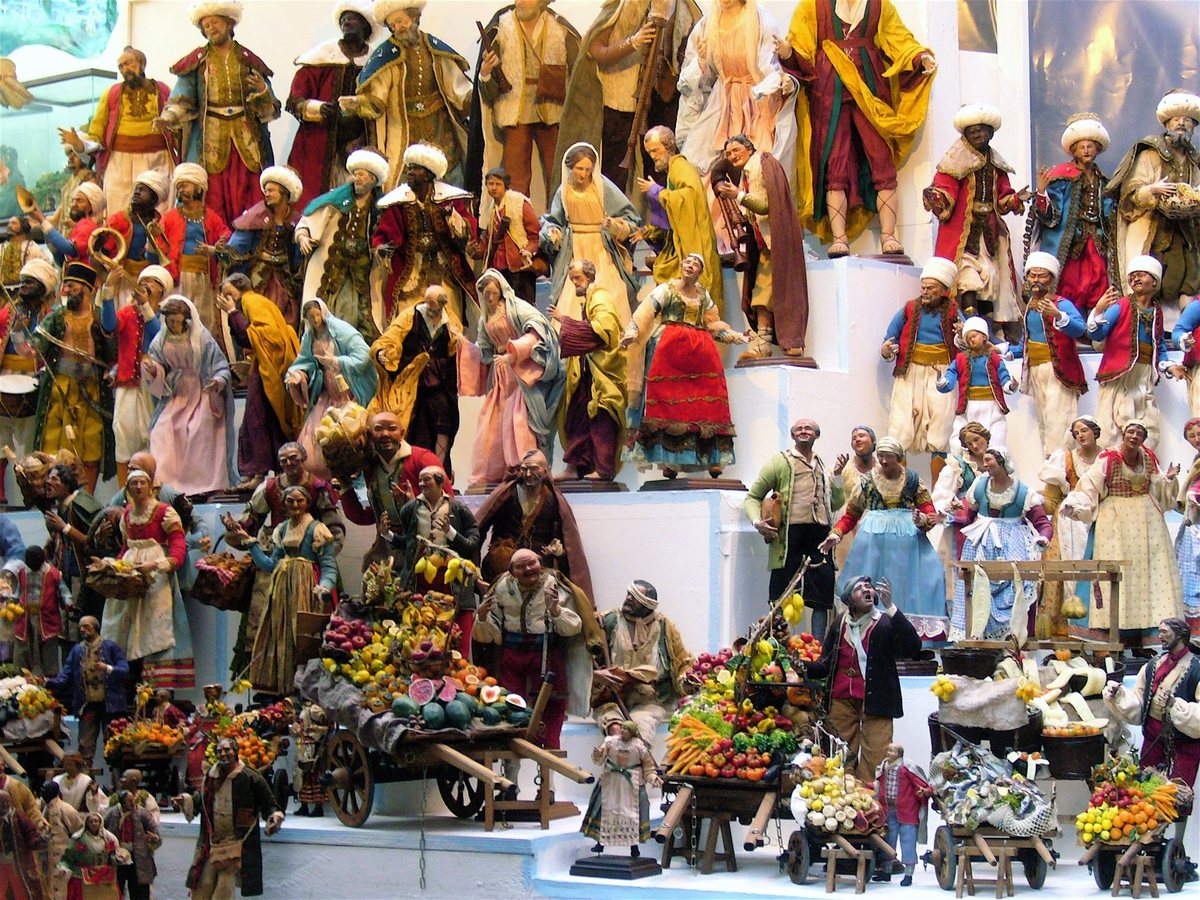
Naples made the presepe an art. In the 1700s its Bourbon kings and queens were devoted to it, and craftsmen filled their scenes with daily life in miniature, people of every class in the costumes of the provinces, all gathered around the manger.
Today the workshops of Via San Gregorio Armeno, the street of the crib makers, are open all year, and at Christmas the street is packed. Alongside the shepherds and angels you will find figures of people in the news.
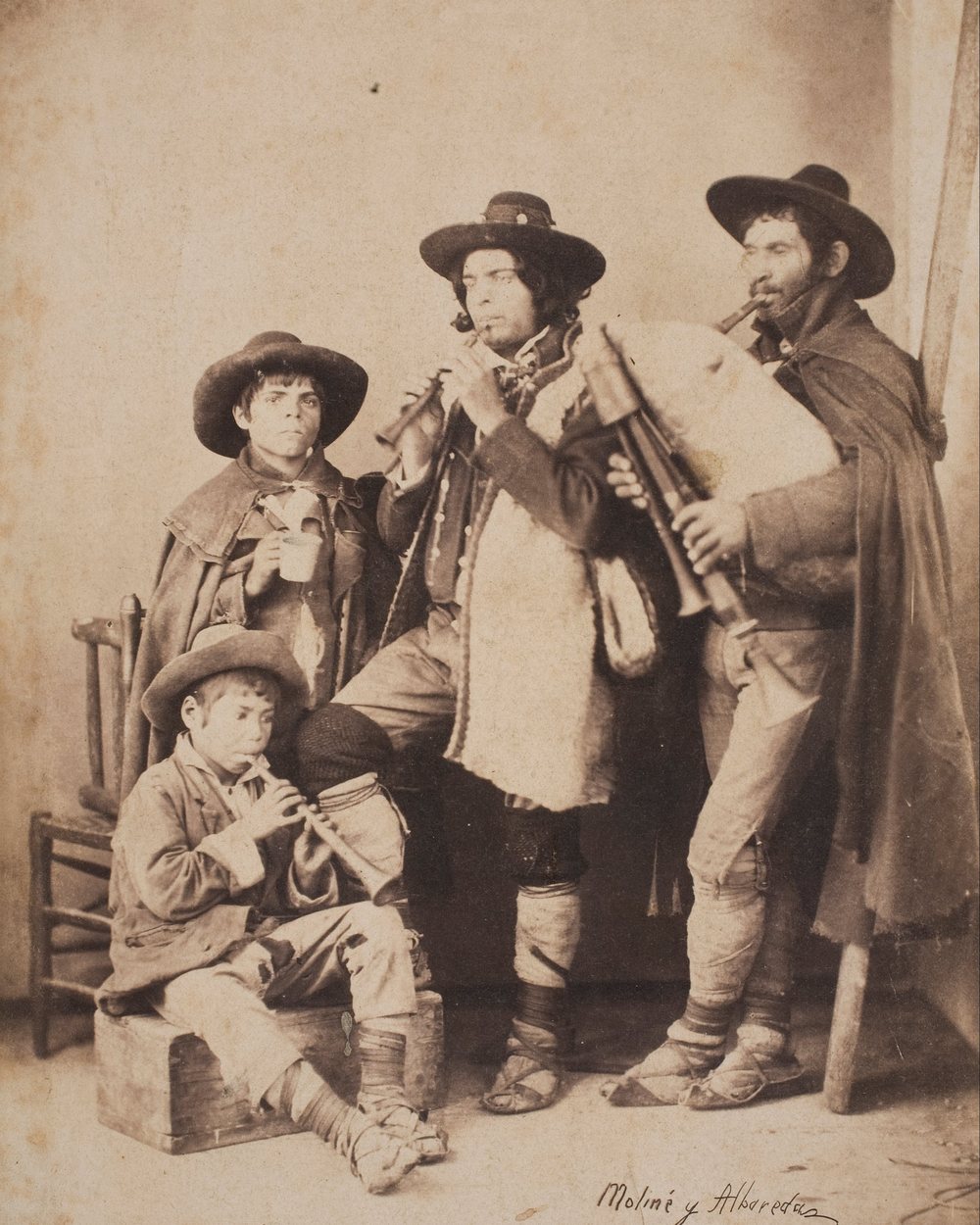
Musicians with a zampogna, photographed about 1850
Zampognari
Bagpipes for the Christmas novena
In Advent, shepherd musicians still come down from the mountains where Lazio, Abruzzo and Molise meet, two by two: one with the zampogna, a bagpipe of sheepskin or goatskin, and one with the ciaramella, a small reed pipe like a folk oboe. They play the Christmas novena before shrines of the Madonna and nativity scenes, in villages and in the streets of Rome.
In 1832 the composer Hector Berlioz heard them in Rome and put one of their tunes into his Harold in Italy. In recent years some forty pairs have still made the journey, from early December until Epiphany.
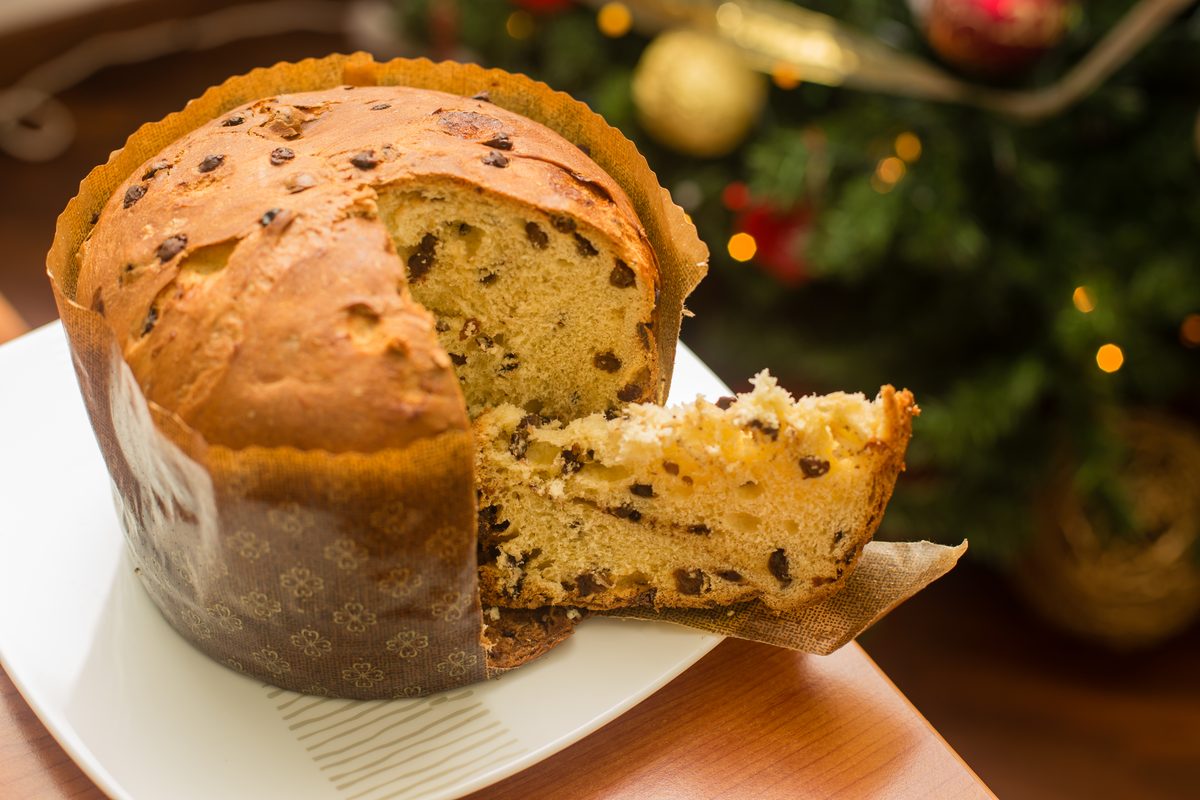
Panettone, the tall, domed sweet bread of Milan, studded with raisins and candied peel, is on Christmas tables all over Italy. The legend of Toni, a kitchen boy who saved a burned dessert, is just that, a legend. The tall, airy loaf we know was perfected in Milan in the late 1800s, and since 2005 Italian law has set what a panettone must contain, down to the butter and the natural sourdough.
Its rival is pandoro, the golden cake of Verona, baked in a tall mold shaped like an eight-pointed star. Domenico Melegatti of Verona patented it in 1894, and its star shape is now part of the law as well.
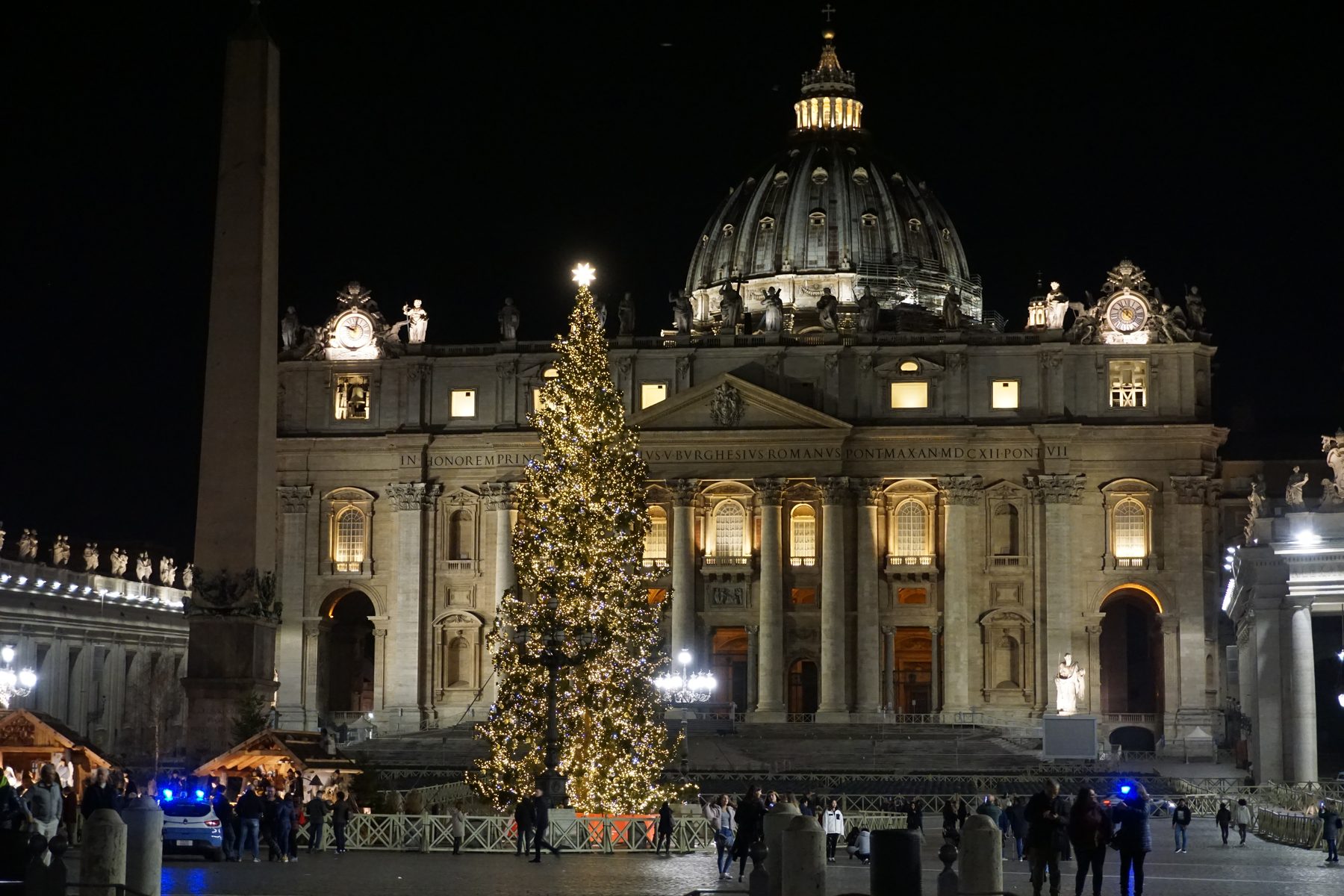
Since 1982, when Pope John Paul II began the custom, a tall Christmas tree and a large nativity scene have stood in St. Peter's Square each December, gifts from a different part of Italy or Europe each year. In 2026 the tree, a silver fir about 82 feet tall, comes from Terranova di Pollino in Basilicata, and the nativity scene from Abruzzo, with thatched shepherds' huts and terracotta shepherds in Abruzzo dress.
On Christmas Eve the Pope celebrates the Mass during the Night in St. Peter's Basilica, and at noon on Christmas Day he gives the blessing Urbi et Orbi, to the city and to the world, from the balcony above the square.
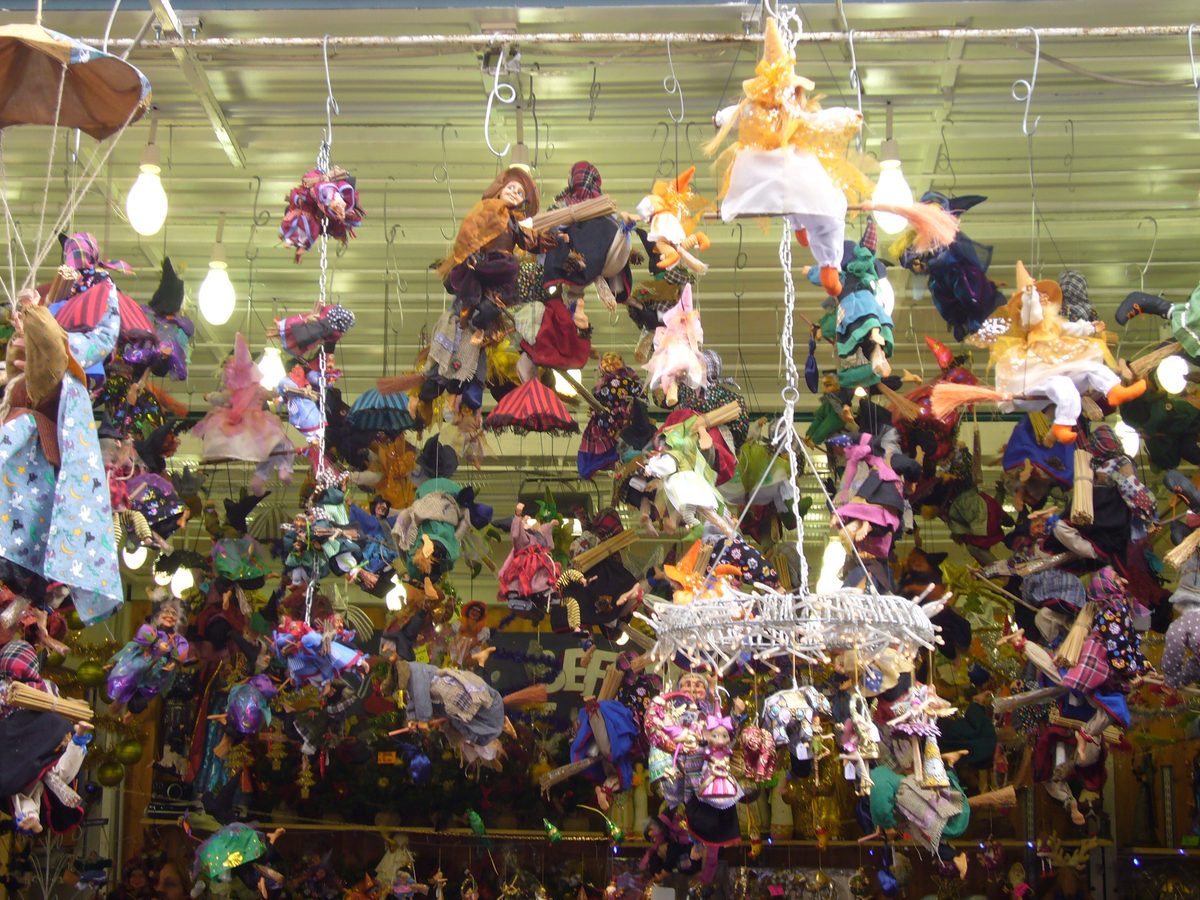
Befana dolls at the Christmas market in Piazza Navona, RomePhoto: Lalupa, CC BY-SA 3.0
La Befana, January 6
The kind old woman of Epiphany
Italian children have one more visitor after Christmas. On the night before Epiphany, the Befana comes down the chimney and fills their stockings with sweets, and by tradition a lump of coal for anyone who has been naughty.
The story goes that the Wise Men, lost on their way to Bethlehem, stopped to ask an old woman for directions and invited her along. She said no, and soon wished she had gone. She filled a sack with gifts and set out after them, and she still knocks at every door, leaving something for each child in the hope of finding the Christ Child.
Every Christmas
Christmas on Italian TV
Two broadcasts belong to an Italian Christmas, and you can see the first one from America too.
Christmas Eve and DayRai 1
The Pope's Christmas Masses
Rai 1 carries the Mass during the Night live from St. Peter's, and the blessing Urbi et Orbi at noon on Christmas Day. In America, NBC has aired the Pope's Christmas Eve Mass late on Christmas Eve in recent years, right after It's a Wonderful Life.
Every Christmas since 1993Canale 5
Il Concerto di Natale
A Christmas concert for charity that began in the Vatican's Paul VI Hall and now comes from Rome's Auditorium della Conciliazione.
The recipe card
Make the linguine with clams
An Italian Christmas · JustChristmas
Linguine with Clams
One of the seven fishes
Makes
4 servings
Prep
15 min
Ready in
1 hr 35 min
Ingredients
For the clams
3 pounds (about 1.4 kg) small hard-shell clams, such as littlenecks or Manila clams
Kosher salt, for soaking the clams and salting the pasta water
For the pasta
1 pound (450 grams) linguine
1/3 cup (80 ml) extra-virgin olive oil, plus more for serving
4 cloves garlic, thinly sliced
1/4 to 1/2 teaspoon crushed red pepper flakes
1 small bunch flat-leaf parsley: a few stems kept whole, the leaves finely chopped (about 1/3 cup)
1/2 cup (120 ml) dry white wine, or 1/2 cup water for an alcohol-free version
Freshly ground black pepper
Steps
Sort the clams. Throw away any with cracked or broken shells, and any open ones that do not close when you tap them.
Scrub the clams under cold running water. Put them in a large bowl of cold water with about 1 tablespoon of kosher salt and let them sit for 1 to 2 hours, changing the water once or twice, so they let go of any sand. Lift them out with your hands and leave the gritty water behind.
Bring a large pot of water to a boil and salt it well.
In a large, deep skillet with a lid, warm the olive oil over medium heat. Add the garlic, red pepper flakes and parsley stems and cook, stirring, until the garlic is fragrant and just starting to turn golden, 1 to 2 minutes.
Drop the linguine into the boiling water. Add the clams and the wine or water to the skillet, raise the heat to high, cover and cook, shaking the pan now and then, until the clams open, 4 to 8 minutes. Move the clams to a bowl as they open. Throw away any that stay closed.
Take out the parsley stems. If the liquid in the pan looks sandy, pour it through a fine-mesh strainer lined with damp cheesecloth or a paper towel, then return it to the skillet. Pull about half of the clams from their shells and leave the rest whole.
When the linguine is still quite firm, about 3 minutes short of the package time, scoop out 1 cup of the pasta water, then drain.
Add the linguine to the clam liquid in the skillet over medium-high heat. Toss with tongs for 2 to 3 minutes, adding pasta water a splash at a time, until the pasta is just tender and the sauce turns glossy and clings to it.
Return all the clams and any juices to the pan, add the chopped parsley and a drizzle of olive oil, and toss again. Taste and add pepper, and salt only if it needs it, since the clam juices are salty. Serve right away, with a bowl on the table for the empty shells.